

CONVENIENCE HAS A COST
And We Are Paying for It With Our Health: An Article by Tracie Taylor

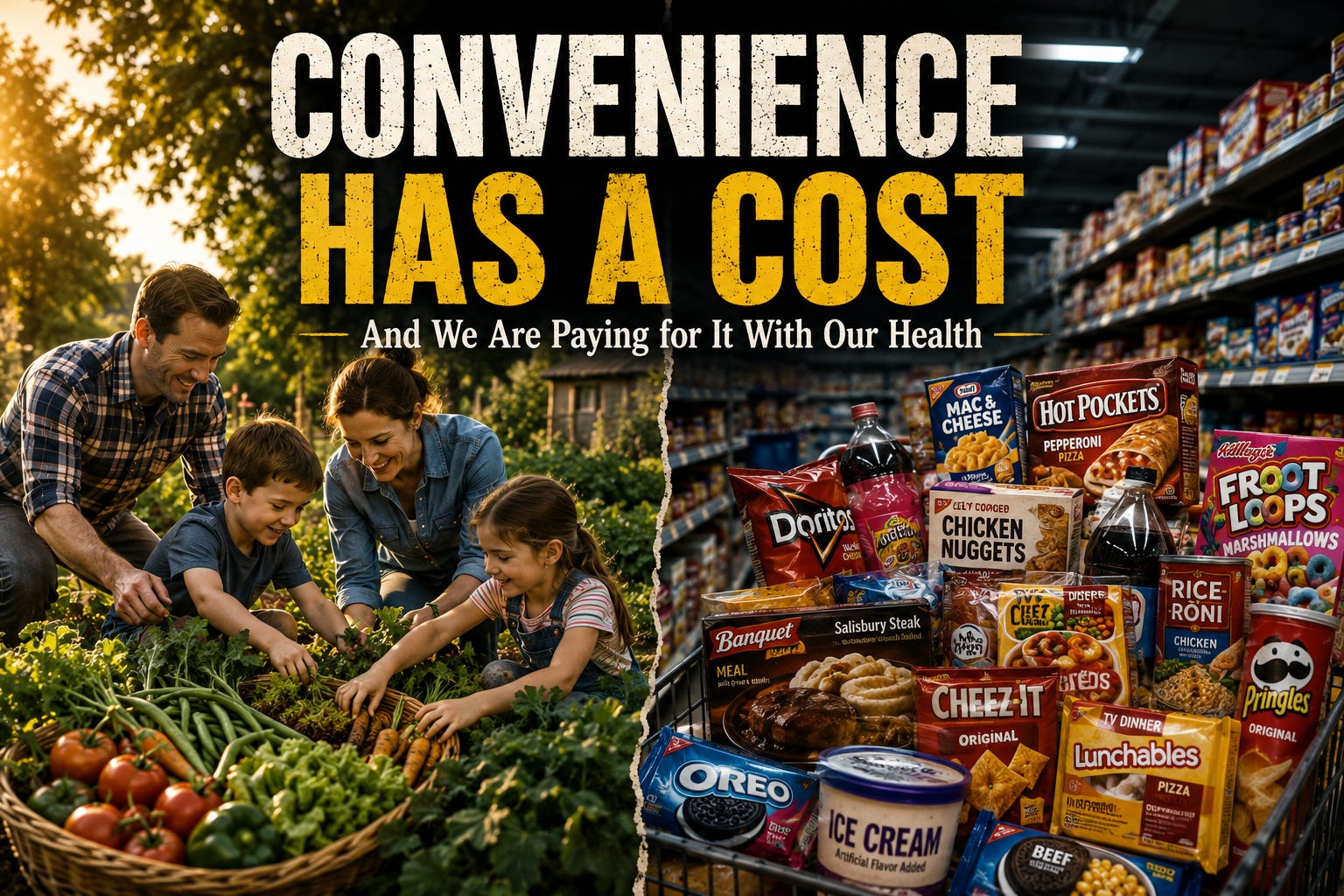
For years, I assumed cancer only seemed more common because we had become better at finding it.
After all, our grandparents didn’t have the technology we have today. They didn’t have advanced imaging, widespread screening programs, or instant global communication. It seemed logical that cancer appeared to be increasing simply because we were finally identifying cases that might have gone unnoticed in previous generations.
And to some extent, that’s true.
Modern medicine has become remarkably good at detecting disease.
But the more I looked at the numbers, the more I realized that explanation doesn’t tell the whole story.
The Numbers Are Hard to Ignore
Today, millions of people around the world are diagnosed with cancer every year.
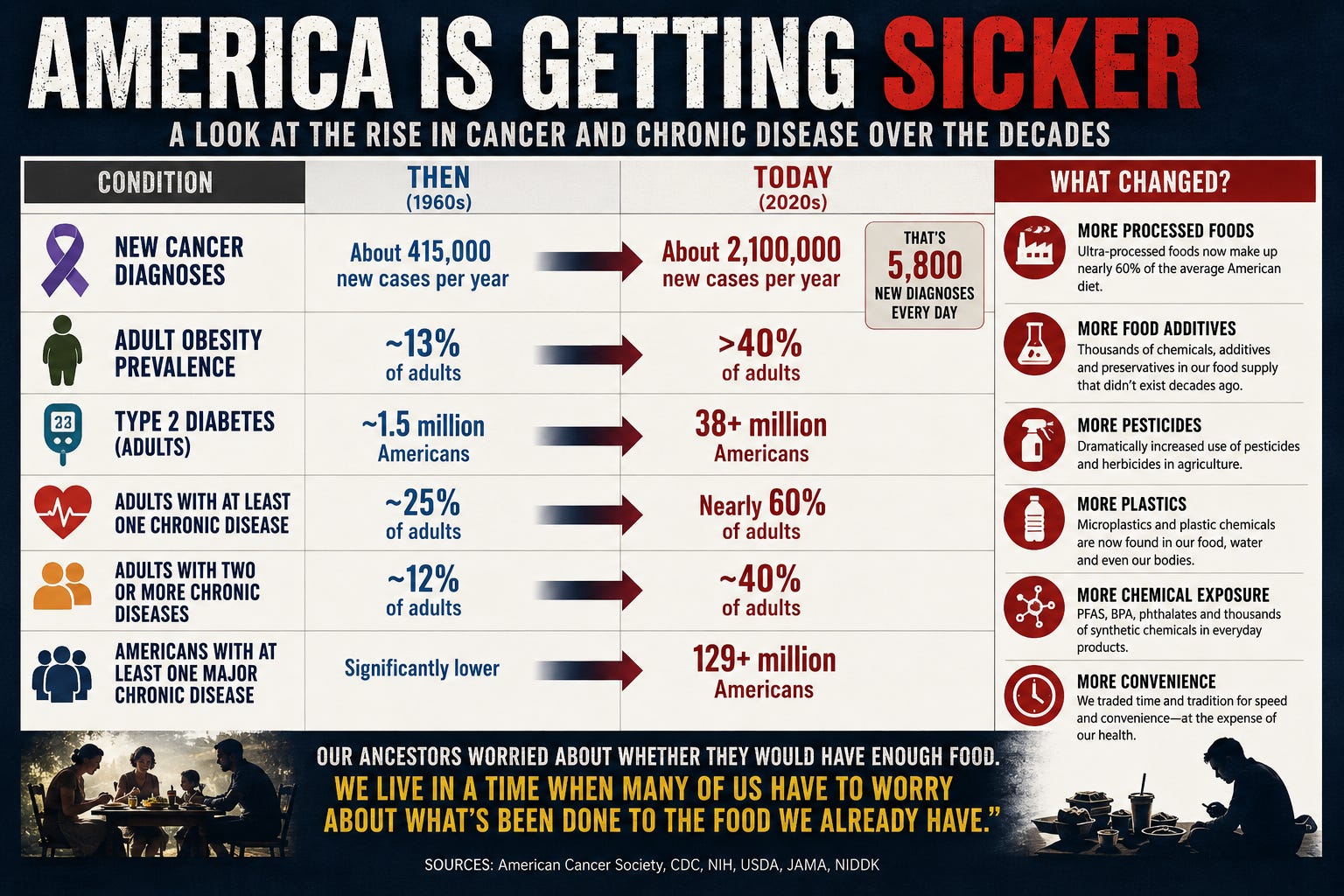
In the United States alone, more than 2 million new cancer cases are expected this year.
That works out to roughly 5,800 new cancer diagnoses every single day.
Think about that for a moment.
Before you go to bed tonight, approximately 5,800 Americans will hear the words:
“You have cancer.”
Tomorrow, another 5,800.
The day after that, another 5,800.
Cancer is no longer something that affects only a few families.
It touches nearly every family.
And while cancer is only one piece of the puzzle, it is part of a much larger trend.
Over the past several decades, America has also experienced dramatic increases in obesity, Type 2 diabetes, fatty liver disease, autoimmune disorders, and other chronic illnesses that were once far less common.
In 1960, approximately 13% of American adults were obese.
Today, that number exceeds 40%.
More than 38 million Americans now live with diabetes.
More than 129 million Americans live with at least one major chronic disease.
Nearly 60% of American adults live with at least one chronic condition.
Approximately 40% live with two or more.
Researchers have also documented troubling increases in several cancers among younger adults, including colorectal cancer, a disease once considered primarily associated with older age.
Population growth explains some of these numbers.
Improved detection explains some of them too.
But it does not explain everything.
Something is changing.
The question is what.
And perhaps more importantly, why.
Now before anyone starts typing, let me be clear.
I am not claiming that every cancer diagnosis is caused by food additives, pesticides, preservatives, or chemicals.
Cancer is complex.
There are genetic factors.
Lifestyle factors.
Environmental factors.
And many things we still don’t fully understand.
But I do believe there is a question that deserves to be asked.
At what point do we stop calling it coincidence?
There are billions of people on this planet living vastly different lives.
Different cultures.
Different governments.
Different religions.
Different languages.
Yet every one of us depends on the same basic things.
Food.
Water.
Air.
If disease is increasing around the world, perhaps we should pay closer attention to the things we all have in common rather than the things that divide us.
Because regardless of where we live, what language we speak, or what political party we belong to, every one of us eats food, drinks water, and breathes air.
And today, all three are dramatically different than they were just a few generations ago.
Our grandparents were not surrounded by thousands of synthetic chemicals.
They weren’t consuming ultra-processed foods at nearly the levels we do today.
They weren’t exposed to microplastics, PFAS “forever chemicals,” industrial food dyes, preservatives, emulsifiers, herbicides, pesticides, and countless other substances that have become part of modern life.
Yet we are repeatedly told that all of these things are perfectly safe.
Maybe they are.
Maybe they aren’t.
But I find it interesting that asking questions about them is often treated as more dangerous than the substances themselves.
The FDA and the Questions We Should Be Asking
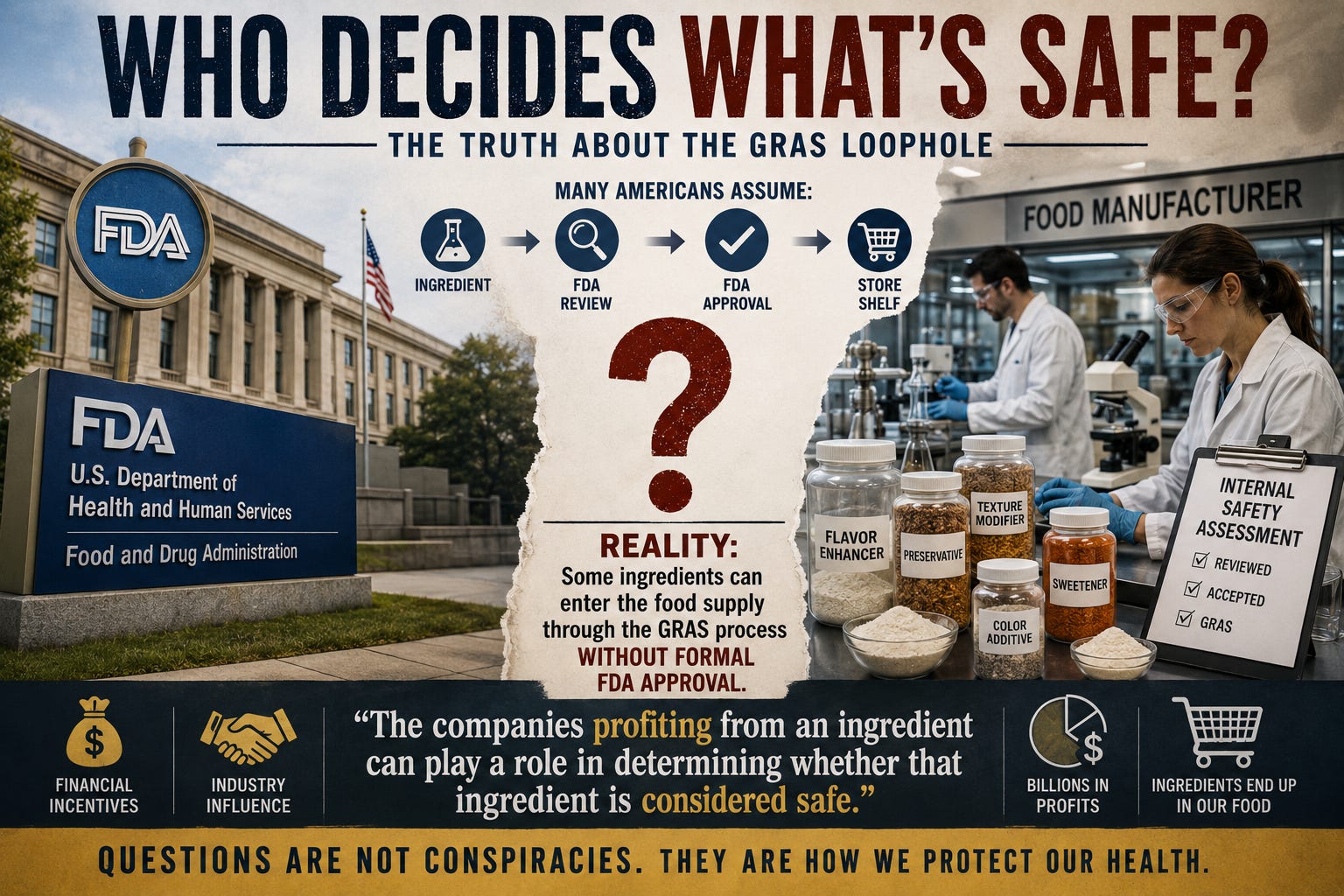
Most Americans assume that every ingredient in their food has been thoroughly reviewed and approved by the FDA before it ever reaches store shelves.
That assumption would be wrong.
Many people are surprised to learn that under the GRAS system, which stands for “Generally Recognized As Safe,” companies can in some circumstances determine that certain ingredients are safe without formal FDA approval before they enter the food supply.
Think about that for a moment.
The same companies that stand to profit from an ingredient can have significant influence over whether that ingredient is considered safe.
Does that automatically mean corruption?
No.
Does it prove some massive conspiracy?
No.
But it absolutely raises legitimate questions.
Questions that every American should be asking.
Why does a system designed to protect consumers allow manufacturers so much influence over safety determinations?
Why are some ingredients restricted or banned in other countries while remaining legal here?
Why do Americans spend more on healthcare than almost any nation on Earth while chronic disease continues to rise?
And perhaps the biggest question of all:
If the system is working exactly as intended, why are we getting sicker?
Cahoots or Consequences?
Some people will dismiss these concerns as conspiracy theories.
Personally, I think that’s an easy way to avoid difficult conversations.
Do I have evidence that executives from food companies, pharmaceutical corporations, hospitals, and government agencies are sitting around a table plotting how to make Americans sick?
No.
But I don’t think that’s necessarily how these things work.
Sometimes incentives accomplish what conspiracies never could.
Food companies profit when consumers buy more products.
Manufacturers profit when food lasts longer on shelves.
Chemical companies profit when their products are widely used.
Pharmaceutical companies profit when medications are prescribed.
Hospitals profit when treatments are performed.
Insurance companies profit from managing those treatments.
The question becomes simple.
Who profits from a healthy population?
Because it certainly doesn’t appear to be the industries generating billions of dollars from sickness.
Whether you call that corruption, regulatory capture, greed, negligence, or simply a broken system, the outcome looks remarkably similar.
The American people are left carrying the burden.
Why Are We Putting This Stuff In Our Food?
There is another question that rarely gets asked.
Why do we need many of these ingredients at all?
Not why are they safe.
Why are they there?
Take artificial food dyes.
Many of them serve no nutritional purpose whatsoever.
They don’t make food healthier.
They don’t provide vitamins.
They don’t improve the quality of the ingredients.
They simply make products look more appealing.
In other words, they exist primarily to help sell products.
Artificial dyes don’t make food healthier.
Preservatives don’t make food healthier.
Shelf-life extenders don’t make food healthier.
Most of these ingredients exist because they make products easier to manufacture, ship, store, market, and sell.
In other words, many of them primarily benefit the companies making the products, not the families eating them.
The same can be said for many preservatives, colorings, texture enhancers, and shelf-life extenders.
Why should a food product need to sit on a shelf for a year?
Who benefits from that?
Certainly not the consumer.
The primary beneficiaries are manufacturers, distributors, and retailers.
Longer shelf life means less waste.
Lower costs.
Greater profits.
But every time a product is engineered to survive months or even years in storage, we should be asking what was added to make that possible and whether we truly need it in the first place.
Our bodies were designed to consume food.
Not chemistry experiments designed for maximum profitability.
If you are enjoying this article - At Tracing Justice, one way we are being proactive is taking what God provided us. The power of the mushroom. It’s a great way to get your body back into balance! Check out our full line of products by Forest Natural at justiceshrooms.com
So attack the root causes of your body being out of balance! And turn off your check engine light! All USA sourced, made and packaged!
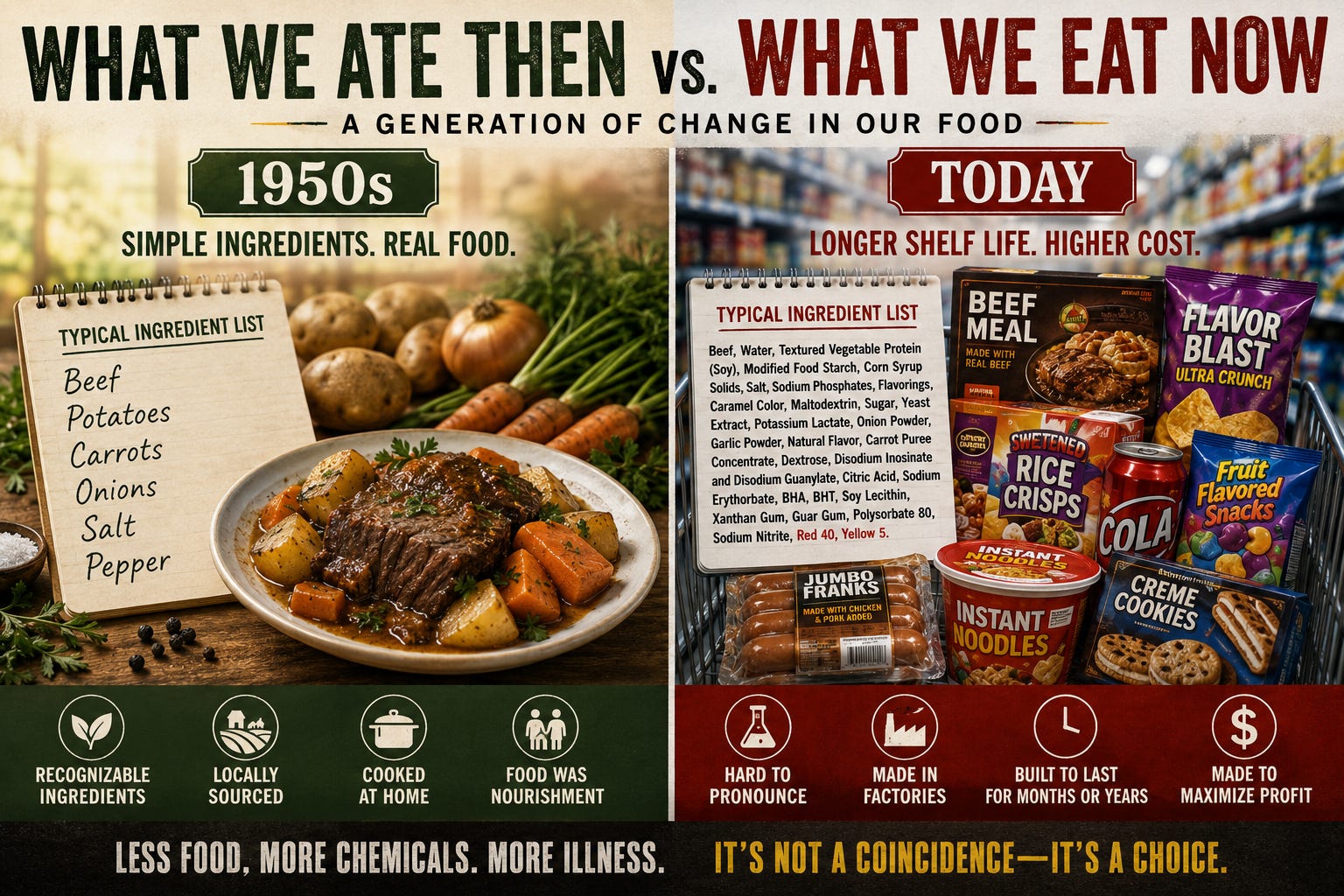
Our Grandparents Ate Food. We Eat Products.
Walk through your grocery store and look at the ingredient labels.
Not the front of the package.
The back.
The ingredient list.
Many products contain ingredients most people cannot pronounce, explain, or identify.
Ask yourself a simple question.
Why are they there?
Are they improving nutrition?
Or are they extending shelf life?
Reducing costs?
Improving appearance?
Increasing profits?
A tomato doesn’t need a commercial.
A strawberry doesn’t need a mascot.
An egg doesn’t need artificial coloring.
Real food sells itself.
The products that require the most marketing are often the ones furthest removed from what nature intended.
Even when we choose fruits and vegetables, many have been sprayed with pesticides, transported across continents, waxed, preserved, and bred for appearance rather than nutrition.
We are often told to eat healthier, yet much of what passes for healthy food today is far removed from what previous generations pulled from their gardens.
That’s one reason more families are returning to backyard gardening.
They want to know what was used on their food because they were the ones who grew it.
Our ancestors worried about whether they would have enough food.
We live in a time when many of us have to worry about what has been done to the food we already have.
Our grandparents ate food.
We increasingly eat products.
And there is a difference.
Food comes from the earth.
Products come from factories.
Somewhere along the way, convenience became more important than quality.
And now we are living with the consequences.
Before I Point Fingers, Let Me Be Honest
I am guilty too.
I’ve bought the frozen lasagna.
I’ve grabbed the boxed au gratin potatoes.
I’ve chosen convenience over effort.
Most of us have.
After a long day, it’s easier to throw something in the oven than spend an hour preparing a meal from scratch.
That’s exactly why these products sell.
They’re fast.
They’re easy.
They’re convenient.
I understand the appeal because I’ve made the same choices.
But convenience has a cost.
And I believe we’ve spent decades trading our health for it.
Not because we’re bad people.
Not because we’re stupid.
But because convenience is seductive.
It saves time today while quietly borrowing from tomorrow.
Taking Back Responsibility
When nearly 5,800 Americans are diagnosed with cancer every day, and millions more are struggling with obesity, diabetes, heart disease, autoimmune disorders, and other chronic illnesses, we should be willing to ask difficult questions.
Not because we’re looking for someone to blame.
But because we should be looking for solutions.
If what we’re doing is working, why are so many people sick?
If our food system is serving us well, why are chronic diseases becoming increasingly common?
If convenience is making life better, why does it seem to be making us less healthy?
The truth is, no government agency is going to save us.
No politician is going to fix every problem.
No corporation is suddenly going to prioritize your health over its quarterly earnings report.
If we want healthier families, healthier communities, and healthier children, responsibility starts with us.
It starts with reading labels.
It starts with cooking more meals ourselves.
It starts with supporting local farmers whenever possible.
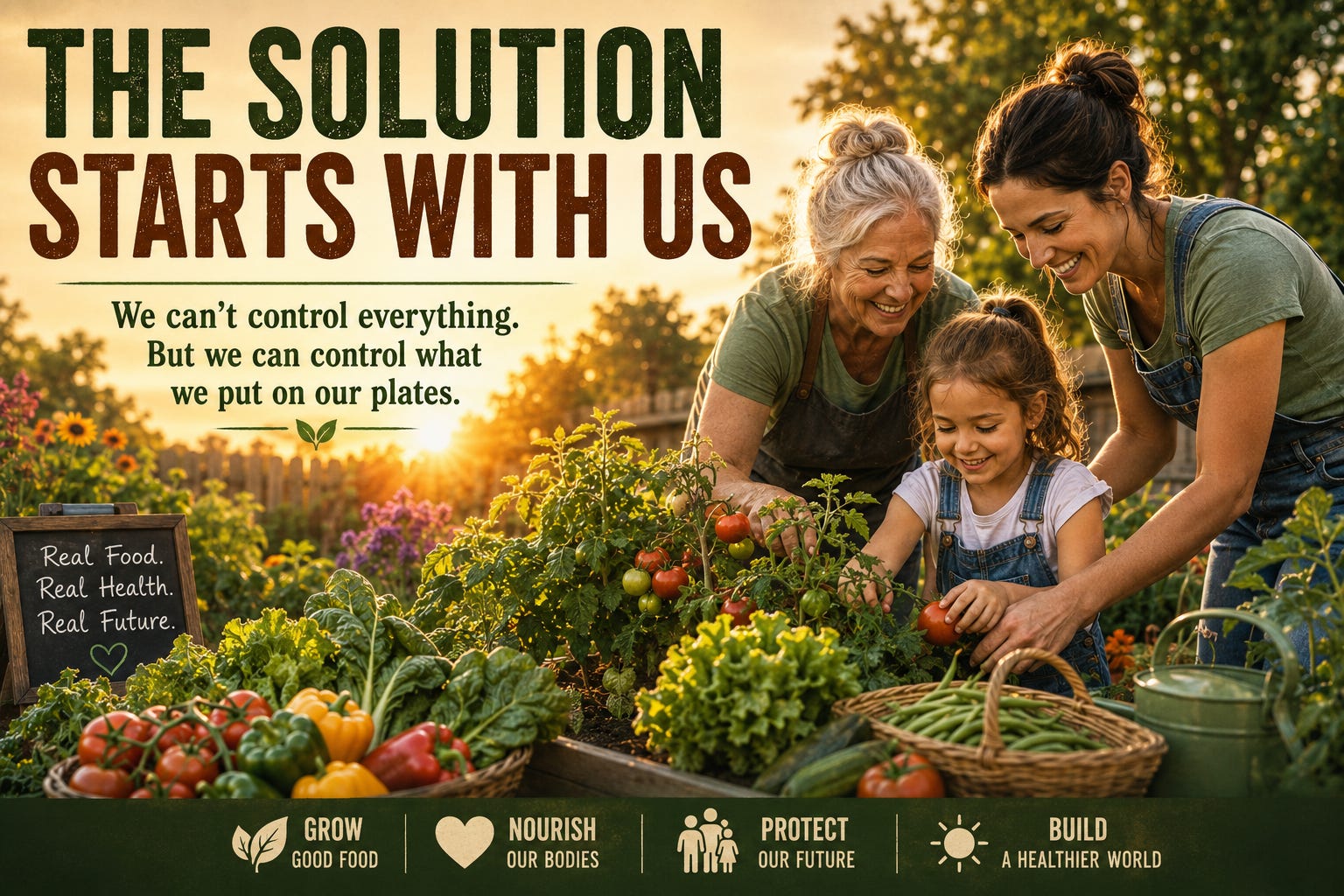
It starts with planting gardens.
Growing tomatoes.
Growing peppers.
Growing beans.
Teaching our children where food actually comes from.
Using the soil in our own backyards instead of relying entirely on food produced hundreds or thousands of miles away.
No, we can’t control everything.
We can’t control every chemical in the environment.
We can’t control every decision made in Washington.
But we can control what we put on our plates.
And if we’re ever going to reverse these trends, we have to stop pretending someone else is going to do it for us.
We have to take responsibility.
We have to stop trading our health for convenience.
I’m not asking anyone to become a full-time farmer.
I’m asking us to stop accepting convenience as an excuse.
We owe it to ourselves, our children, and our grandchildren to start asking what we’re eating, why we’re eating it, and who benefits from it.
Because convenience has a cost.
And if we want healthier families and healthier communities, we have to stop paying that price willingly.
Final Thoughts
I don’t claim to have all the answers.
Maybe some of these concerns will prove justified.
Maybe some won’t.
But I refuse to believe that a world filled with more synthetic chemicals, more processed foods, more pesticides, more preservatives, more plastics, and more environmental contaminants than any generation in human history has no effect whatsoever on human health.
Common sense tells me otherwise.
Convenience has a cost.
For decades we’ve been told that cost was worth paying.
Faster.
Easier.
Cheaper.
But perhaps the bill has been arriving in another form all along.
Our health.
The truth is, we can’t control everything.
We can’t control every decision made in Washington.
We can’t control every chemical released into the environment.
We can’t control every product sitting on a grocery store shelf.
But we can control more than we’ve been led to believe.
We can control what we buy.
We can control what we feed our families.
We can control whether we read the ingredient label or ignore it.
We can control whether we spend a little more time preparing real food instead of relying on products designed for convenience.
We can control whether we plant a garden, support local farmers, or teach our children where food actually comes from.
We may not be able to fix the entire system overnight.
But we can start taking back control of the parts that belong to us.
One choice.
One meal.
One garden.
One family at a time.
Because if we’re ever going to change these statistics, it won’t happen through wishful thinking.
It will happen when enough people decide their health is worth more than convenience.
And maybe the solution isn’t found in another prescription bottle.
Maybe part of it is found in a garden…..
Don’t forget about your pets too! They are out of balance by the awful fillers they put into pet food! Get your furry friends back into balance as well with justicepetclub.com! All USA made, sourced, and packaged!
